

The rigid vs flexible solar panels debate splits every off-grid forum down the middle, and both camps are half right. Prefab cabin owners face a real constraint: curved roofs, weight limits, and aesthetic concerns push people toward flexible panels, while raw performance data keeps pulling engineers back to rigid frames. The truth sits somewhere in the thermal data most sellers never show you.
Quick Comparison Table
| Parameter | Product A (Rigid) | Product B (Flexible) |
|---|---|---|
| Price Range | Mid-range ($$) | Mid-range ($$) |
| Frame Material | Aluminum-framed monocrystalline | ETFE-laminated monocrystalline, no frame |
| Mounting Difficulty | Moderate (brackets, tilt legs required) | Low (adhesive or grommets) |
| Weight | Heavier, roof load matters | Lightweight, under 1/4 the weight |
| Distinctive Feature | Stable output under heat, glass-tempered surface | Curved-surface compatibility, low profile |
Contender #1 Breakdown: The Rigid Panel
This panel uses a standard tempered-glass monocrystalline cell layout inside an anodized aluminum frame. It’s the same construction philosophy found in residential rooftop arrays, scaled down for cabins and sheds. The glass surface handles hail, debris, and foot traffic without flexing, and the aluminum frame gives you real mounting points for lag bolts or Z-brackets.
The tradeoff is obvious the moment you unbox it: weight and bulk. You need a flat or gently sloped surface, plus standoff brackets to allow airflow underneath the panel. That airflow gap isn’t cosmetic — it’s the reason rigid panels outperform flexible ones once temperatures climb, a point confirmed by the U.S. Department of Energy’s solar technology overview. Without that gap, any panel loses output as cell temperature rises above the standard 77°F test condition.

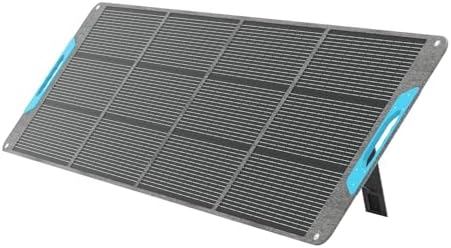
- [Industry-Leading Efficiency 25%] Upgraded with 16BB N-Type cell technology, Renogy solar panels for camping achieve...
- [Lightweight & Magnetic Handle Design] Weighing only 13.89 lbs, renogy portable solar panel is the lightest in its class. Innovative folding...


Contender #2 Breakdown: The Flexible Panel
Flexible panels ditch the glass and aluminum entirely, replacing them with a thin ETFE polymer laminate that bends up to 30 degrees in some cases. That flexibility makes them the obvious choice for curved cabin roofs, RV shells, or anywhere a rigid frame simply won’t sit flush.
Here’s the myth that needs busting: manufacturers market these as equally efficient to rigid panels. On paper, cell efficiency ratings often match — both may claim 21-23% efficiency using similar monocrystalline cells. But that number is measured under lab conditions at 77°F. Mount a flexible panel directly against a hot metal roof (a common install method since they lack standoff legs), and cell temperature can climb past 140°F on a sunny afternoon. Every panel loses roughly 0.3-0.5% output per degree Celsius above the rated test temperature, according to National Renewable Energy Laboratory research on temperature coefficients. Without an air gap, that’s a realistic 15-20% efficiency drop during peak sun hours — the exact time you need full output.

- 【ShadowFlux Anti-Shading Technology】The Renogy ShadowFlux solar panel uses advanced cell-level bypass technology with up to 30 bypass diodes...
- 【25% High-Efficiency N-Type Cells】This 200 watt solar panel features up to 18BB A+ Grade N-Type solar cells with up to 25% conversion...
Head-to-Head Key Differences
Durability Under Real Conditions
Rigid panels survive hail, snow load, and years of UV exposure behind tempered glass. Flexible panels are more vulnerable to punctures and delamination, especially in climates with frequent freeze-thaw cycles or heavy debris fall. Glass ages better than polymer laminate over a 10-year horizon.
Practicality of Mounting Flexible Panels
This is where flexible panels win outright. Mounting flexible panels takes minutes with adhesive backing or grommets, no drilling, no brackets, no roof penetration. For curved metal roofs, canvas-sided glamping structures, or trailers, there’s no rigid alternative that fits the surface at all.
Value for the Price
Dollar-for-dollar output, rigid panels deliver more consistent wattage across a full sunny day. Flexible panels cost roughly the same per watt on paper but deliver less usable energy once thermal losses are factored in, unless you actively manage airflow underneath them.
Which One Should You Choose?
Buy the Rigid Panel if…
- Your roof is flat or has a standard pitched slope
- You want maximum output during peak summer heat
- You’re building a permanent off grid solar kit setup you won’t relocate
- Long-term durability matters more than installation speed
Buy the Flexible Panel if…
- Your prefab cabin or trailer roof is curved or irregular
- Weight limits rule out a framed, glass panel
- You need a fast, no-drill install
- You’re supplementing an existing array rather than running primary power
The Final Verdict
Neither panel wins outright, and that’s the honest answer most reviews avoid. The smarter move for most prefab cabin owners is a hybrid setup: mount rigid panels on any flat roof section with proper standoff brackets for maximum solar panel efficiency, then use flexible panels on curved surfaces, awnings, or secondary mounting points where rigid frames physically don’t fit. This approach gets you the thermal performance of rigid panels where it matters most, plus the placement flexibility of flexible panels everywhere else. Running both in parallel through a shared charge controller gives you redundancy too — if one array underperforms on a hot day, the other picks up the slack.
Other Recommended Gear
If you’re upgrading your setup, you might also want to look at these essentials to round out a reliable off grid solar kit.


Ultimo aggiornamento 2026-10-28 / Link di affiliazione / Immagini da Amazon Product Advertising API