
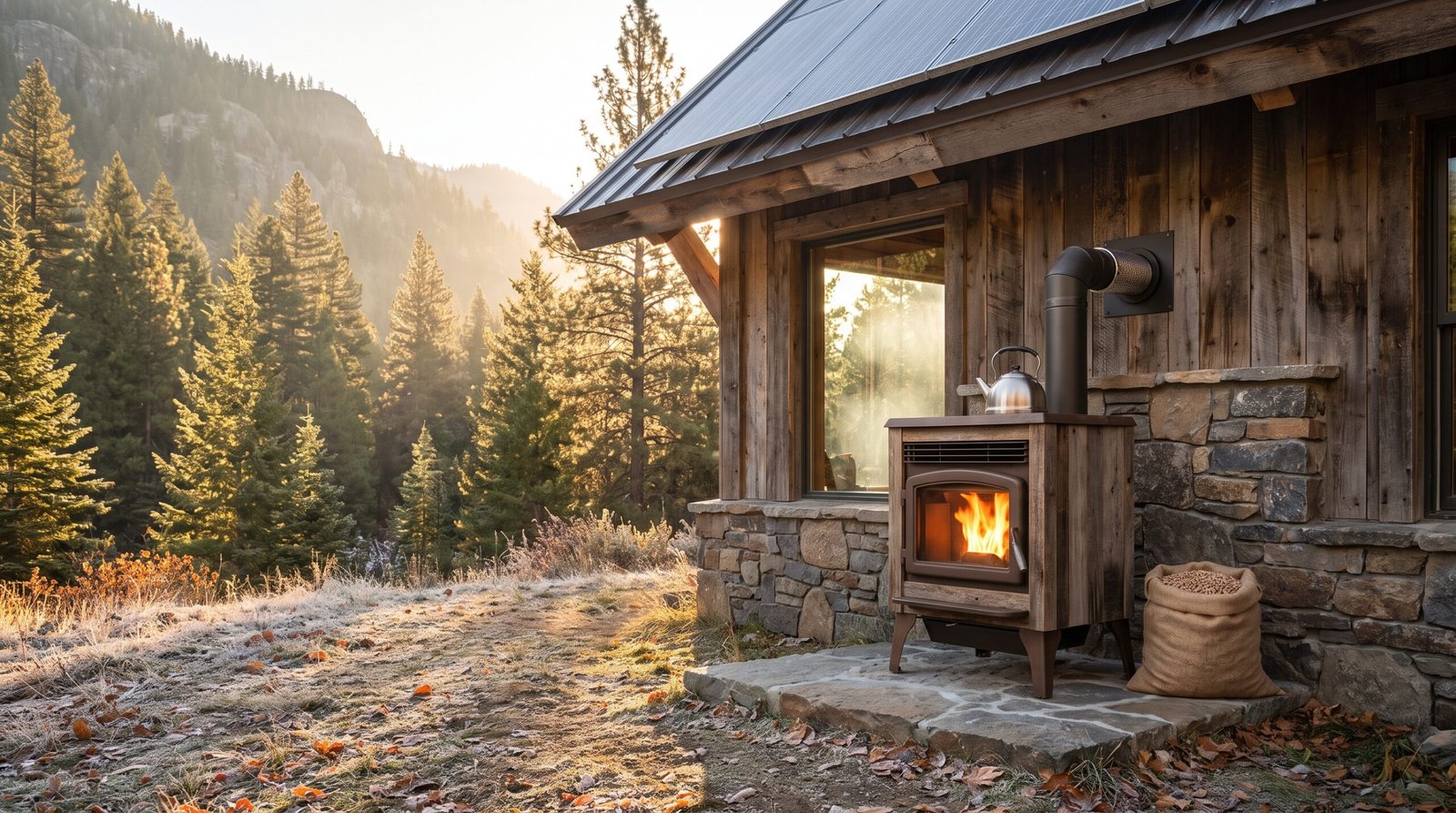
There’s a specific kind of silence you only get off the grid. It’s not just the absence of traffic noise. It’s the absence of that electric hum, that forced-air fan rattling behind you while you try to read by the fire. If you’re building a cabin with no utility hookups, off grid pellet stoves are the only real way to get that clean, dry heat without sacrificing the quiet. No electricity, no inverter draw, no generator running all night just to stay warm. Just gravity, wood pellets, and fire.

- 640in³ Firebox: Experience quick and long-lasting heating with our high-capacity firebox. No need to constantly add firewood. Equipped with a...
- Spacious 8 x 12 in Shelves: The detachable multi-functional shelves provide ample space for cooking outdoors. The efficient heat conduction plate...

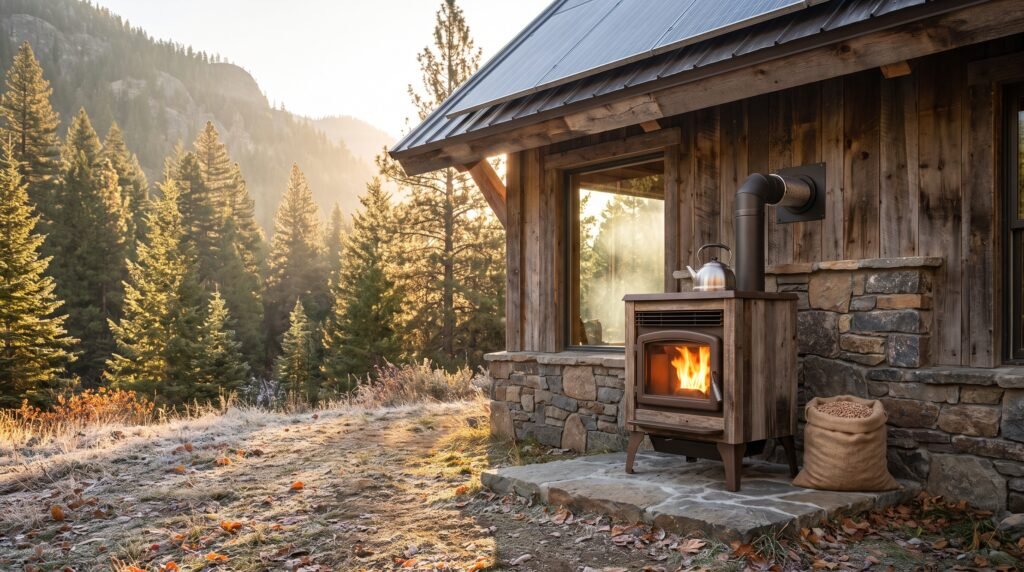
Key Features & Performance of This Non Electric Pellet Heater
This is a gravity fed pellet stove, which means it skips the auger motor entirely. Pellets drop from the hopper into the burn pot through gravity alone, and combustion air moves through a convection loop created by the heat itself. No fan, no circuit board, no battery backup required. That’s the entire point.
Build quality is solid cast iron and heavy-gauge steel, which matters a lot once you’re running this thing at 500°F+ for hours at a stretch. The firebox glass stays reasonably clean thanks to the airwash design, so you actually get to watch the flame dance instead of staring at a soot-covered window by hour three.
Installation is straightforward if you’ve ever run a stovepipe before. You’ll need a proper Class A chimney setup through the roof or wall, and you want to follow local clearance codes to the letter here — this isn’t a device to wing. The National Fire Protection Association publishes clearance standards for solid-fuel stoves that are worth reviewing before you cut a hole in your cabin wall.
Hopper capacity on this unit lands in the mid-range, giving you roughly 12 to 24 hours of burn time per fill depending on your damper setting and the quality of pellets you’re feeding it. That’s a full overnight burn without getting up to reload, which is exactly what you want in a cabin setting.
Pros & Cons
- Pro: Zero electrical draw — works during total grid failure or deep off-grid living with no solar backup needed just for heat.
- Pro: Genuinely quiet operation. No fan motor noise, just the occasional pop and crackle of burning pellets.
- Pro: Large glass door gives a real fireplace-style view of the flame, not just a tiny peephole.
- Pro: Cast iron construction holds heat and radiates warmth even after the fire dies down.
- Con: Heavier than a standard electric pellet stove, so moving it into a small cabin alone is a two-person job.
- Con: Requires more frequent ash cleanout than electric units with auto-feed systems, roughly every 2-3 days of regular use.
- Con: Pellet quality matters more here than on fan-driven stoves — low-grade pellets with excess sawdust clog the gravity feed faster.
- Con: Price sits higher than comparable electric models, which is the tradeoff for not needing power at all.
A Great Alternative
If your cabin footprint is smaller, or you’re setting this up in a bunkhouse or seasonal hunting cabin rather than a full-time residence, this next option is worth a look. It trades some hopper capacity for a more compact footprint and a lower price point, which makes sense if you’re not running it 24/7 through a full winter.

- Power Adjustment: The chimney damper is no longer included in this version. Use the pellet control knob to adjust the fuel feed rate and control...
- Convertible Control Design: The Easy Operation Version can be converted to a Classic Control Version configuration with the appropriate...
Final Verdict
This stove earns its price tag if you’re serious about off-grid cabin heating. It’s not the cheapest option on the market, and it’s not the lightest thing to install. But if your goal is genuine independence from the grid — no generator, no battery bank dedicated to a fan motor, no noise competing with the sound of the fire — this is one of the few off grid pellet stoves that actually delivers on that promise without compromise. For anyone building a prefab cabin with heating as the last unsolved piece of the puzzle, this closes that gap convincingly.
Finding the Best Off-Grid Pellets
A gravity fed pellet stove is only as good as what you feed it. Cheap, dusty pellets are the number one reason these stoves underperform or clog. Look for hardwood pellets with an ash content under 1%, sold in moisture-sealed bags — moisture is the enemy of consistent burn temperature. Premium pellets, often labeled “low-ash” or “super premium,” burn hotter and leave noticeably less residue in the burn pot, which means longer stretches between cleanings. The U.S. Department of Energy’s guide to wood and pellet heating is a solid resource if you want to understand how pellet grade actually affects BTU output and efficiency. Buying in bulk during the off-season also saves real money and guarantees you’re not scrambling for fuel once the first snow hits.
Ultimo aggiornamento 2026-10-28 / Link di affiliazione / Immagini da Amazon Product Advertising API