
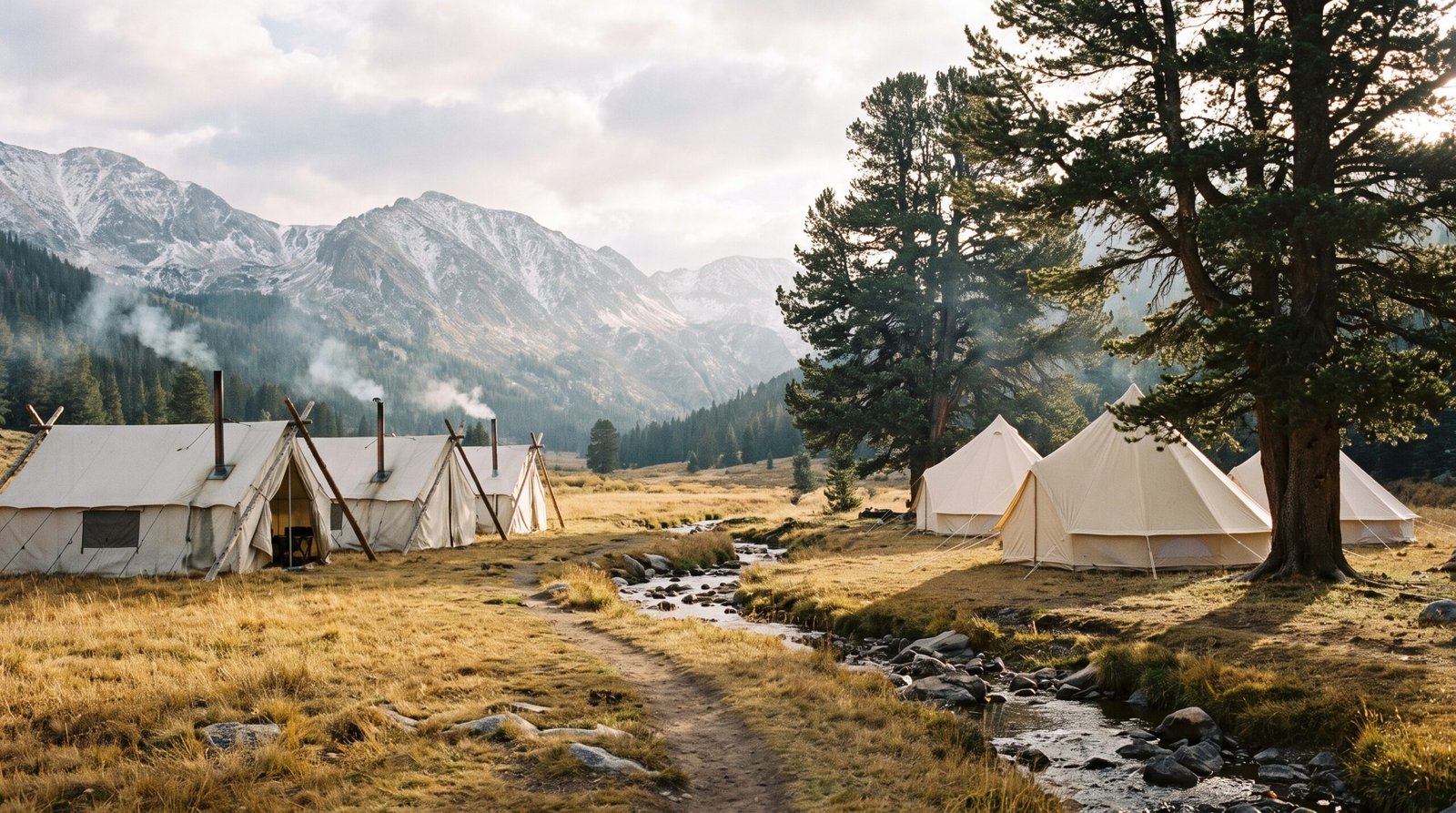
Canvas has been keeping people warm since before nylon existed, and that history matters when you’re planning to live under a tent through a real winter instead of just a weekend. The wall tents vs bell tents debate comes down to a simple question: do you want the setup your great-grandfather’s hunting outfitter used, or the shape that modern glamping outfits put on their Instagram feed? Both hold up in the field. Only one of them was built from the ground up for brutal weather and long hauls.
Quick Comparison Table
| Parameter | Product A: Canvas Wall Tent | Product B: Canvas Bell Tent |
|---|---|---|
| Price Range | $$$ (Higher, kit-based) | $$ (Moderate) |
| Material | Heavy marine-grade canvas, straight walls | Cotton/poly canvas blend, conical shape |
| Setup Time | 45–90 min (frame required) | 15–30 min (center pole system) |
| Wind Resistance | Excellent (low profile, rigid frame) | Good (round shape sheds wind, but taller) |
| Best Use Case | Hunting camps, winter base camps, long-term stays | Seasonal glamping, events, short-term off-grid living |
Contender #1 Breakdown: The Canvas Wall Tent
This is the design outfitters have relied on for over a century in the Rockies and the backwoods of the Pacific Northwest. The straight walls mean you get usable floor space right up to the edges, which matters when you’re storing gear, a wood stove, and cots for a multi-week hunting trip. The rectangular frame construction, usually steel or heavy-gauge aluminum, is what gives this tent its backbone against wind and snow load.
Setup is not fast. You’re building a frame first, then draping and lacing canvas over it. Expect an hour minimum your first few times, less once you’ve done it on repeat. But once it’s up, it stays up. This is the structure you want if you’re testing out the best tent for winter living, especially paired with a stove jack and a wood-burning stove.
The limitation is portability. This is not a tent you throw up for one night. It’s a semi-permanent installation, and it demands a flat, cleared site and a bit of patience.

- 【Multiple Features】①The high-quality polycotton canvas material is durable, airy, water-resistant and UV resistant. But please do not leave...
- 【Super Large Space】①It can accommodate 6-8 people. ②Four steel wires will make the structure of the tent more stable.③The fixing clips...

Contender #2 Breakdown: The Canvas Bell Tent
Bell tents have become the default shape for the modern glamping scene, and for good reason. The single center pole design means setup is dramatically faster than any canvas wall tent kit on the market. One or two people can have it standing and staked in under half an hour.
The conical shape sheds wind and rain efficiently, and the design traces back to military and expedition use, a lineage documented in detail on Wikipedia’s overview of bell tent history. That said, the sloped walls eat into usable space. You lose headroom and storage area near the perimeter, which becomes a real problem if you’re trying to fit a stove, cots, and gear storage for weeks at a time.
This tent shines for weekend retreats, event glamping setups, and seasonal off-grid stays where speed and aesthetics matter more than brute-force weather resistance.

- Cotton Canvas
- Imported
Head-to-Head Key Differences: Wall Tents vs Bell Tents
Durability Under Real Weather
The wall tent’s rigid frame and vertical sidewalls handle heavy snow load and sustained wind far better than a bell tent’s single pole and guy-line system. If you’re camping somewhere wind gusts regularly cross 40 mph, the wall tent’s low, braced profile is the safer bet. The National Weather Service’s wind safety guidance is worth reviewing before committing to any tent structure in open terrain.
Setup Practicality
This is where the bell tent wins outright. If you’re moving camp frequently, or you only need shelter up for a weekend, the single-pole design saves real labor. Wall tents demand frame assembly every single time, which adds up over a season of repeated moves.
Value Over a Long-Term Stay
Per month of occupied use, the wall tent delivers more value because it’s engineered for permanence. The bell tent’s value proposition is upfront speed and lower cost of entry, not long-haul endurance.
Which One Should You Choose?
Buy the Wall Tent if…
- You’re setting up a hunting tent base camp for multiple weeks
- You need to run a wood stove safely through a cold season
- Wind and snow load are a real concern at your site
- You want maximum usable interior floor space
Buy the Bell Tent if…
- You need a fast, repeatable setup for weekend trips or events
- You’re running a seasonal glamping site for guests
- Portability and lower unit cost matter more than long-term endurance
- Your climate doesn’t see extreme sustained wind or heavy snow
The Final Verdict
For anyone planning actual long-term camping, especially through fall and winter, the canvas wall tent is the stronger structural choice. It was designed for exactly this job: standing firm through weeks of hard use and harsh weather without complaint. The bell tent remains the better pick for short stays, events, and glamping operations where speed and looks carry more weight than brute durability. If you’re choosing based on the wall tents vs bell tents question with long-term living as the priority, the wall tent is the one that earns its keep.
Ultimo aggiornamento 2026-10-28 / Link di affiliazione / Immagini da Amazon Product Advertising API