
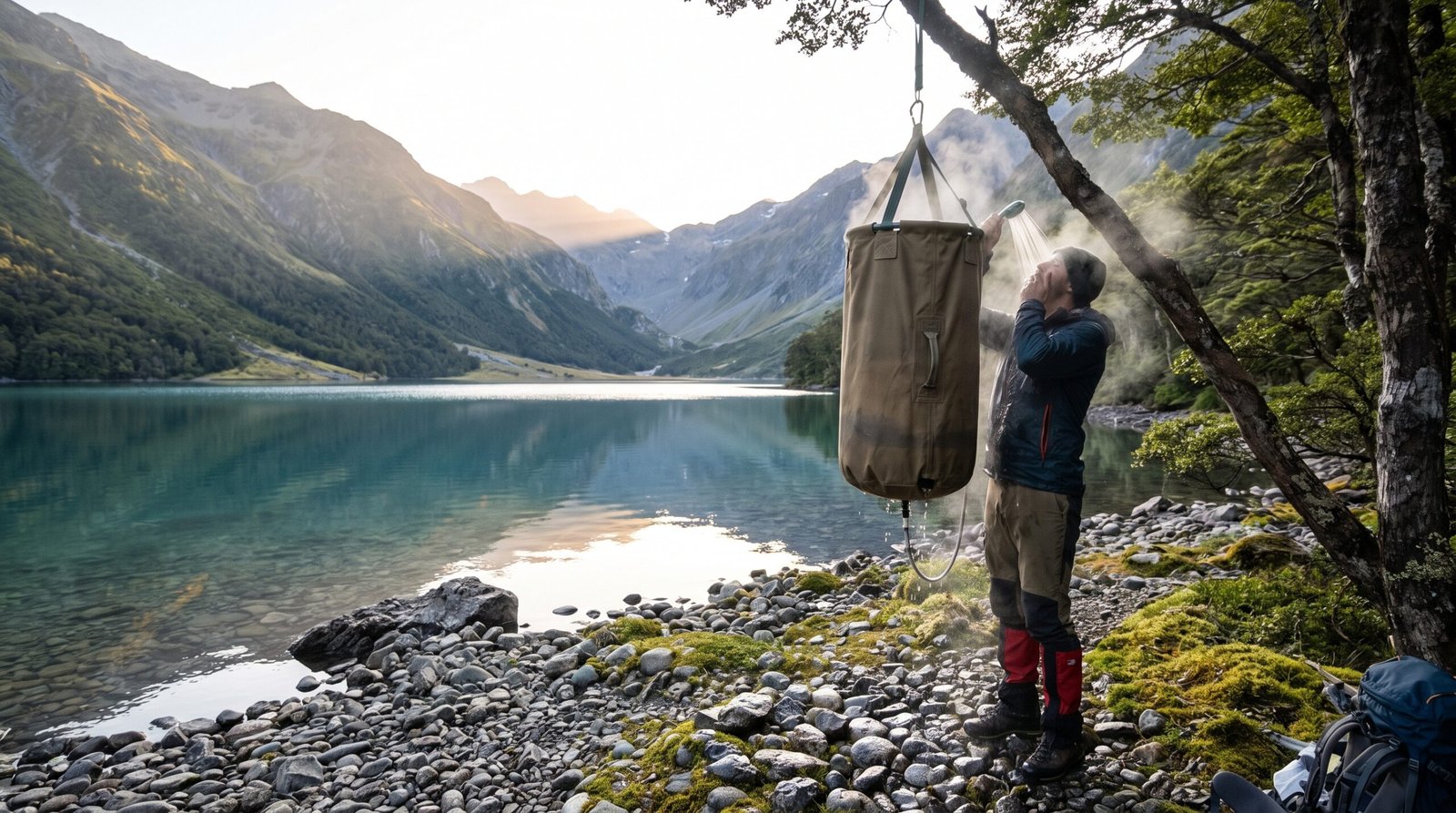
There’s a specific kind of misery that comes from stripping off layers in the cold, wiping down with a damp cloth, and crawling into your sleeping bag still smelling like campfire smoke and trail dust. I’ve been there more nights than I’d like to admit, and it’s exactly why I stopped tolerating “good enough” hygiene setups years ago. A proper portable shower kit is the single biggest quality-of-life upgrade you can add to your camping or off-grid setup, full stop.
This guide isn’t going to waste your time with fluff. I’m breaking down exactly how these systems work, grouped by the two things that actually matter—how the water gets pressurized and how it gets heated—so you can pick a rig that fits your rig, your budget, and your tolerance for cold water.
Why Water Source Matters More Than the Nozzle
Most buying guides obsess over shower heads and spray patterns. Skip that noise. The real decision point is how water moves from your reservoir to your body, because that determines everything else: battery drain, setup time, and whether you’re showering in a trickle or an actual stream.
There are two fundamentally different families of portable shower kit systems: pressurized and gravity-fed. Understanding which camp you’re in will save you from buying the wrong gear twice.
Pressurized Portable Shower Kits: The Glamping Standard
Pressurized systems use a battery-powered pump—usually 12V, sometimes USB rechargeable—to pull water from a bucket, jug, or tank and push it through a hose to a handheld sprayer. This is the setup that makes a glamping bathroom feel like an actual bathroom instead of a survival exercise.
The big win here is consistent pressure. You’re not fighting gravity or elevation tricks. Point the nozzle, squeeze the trigger, get real water flow. Most units in this category run 1-3 GPM (gallons per minute), which sounds modest until you realize that’s roughly what your low-flow shower head at home delivers.
What to Look For in a Pump-Based Shower
- Battery runtime: Look for at least 60 minutes of continuous pump time on a full charge. That’s usually 4-6 actual showers depending on how long you linger.
- Pump housing material: ABS plastic housings hold up better against sun exposure than cheap PVC blends that go brittle after one season.
- Hose length: 8 feet minimum. Anything shorter and you’re basically tethered to a bucket like it’s an IV drip.
- IPX waterproof rating: The pump and battery pack need at least IPX6 protection since they’re going to get splashed constantly.
This is exactly the category where a solid pressurized portable shower kit for camping earns its keep. I’ve run the same unit through three camping seasons, a stint in a converted van, and a summer of backyard glamping tent testing—it just works.

- 【No Heating Function】【Extended Battery Life】 With a long-lasting 6000mAh battery capacity, our camp shower pump can work continuously for...
- 【Advanced LED Display】Our portable camping shower features an upgraded LED display for a clearer picture of power status and water...

Gravity-Fed Systems: The No-Battery Backup
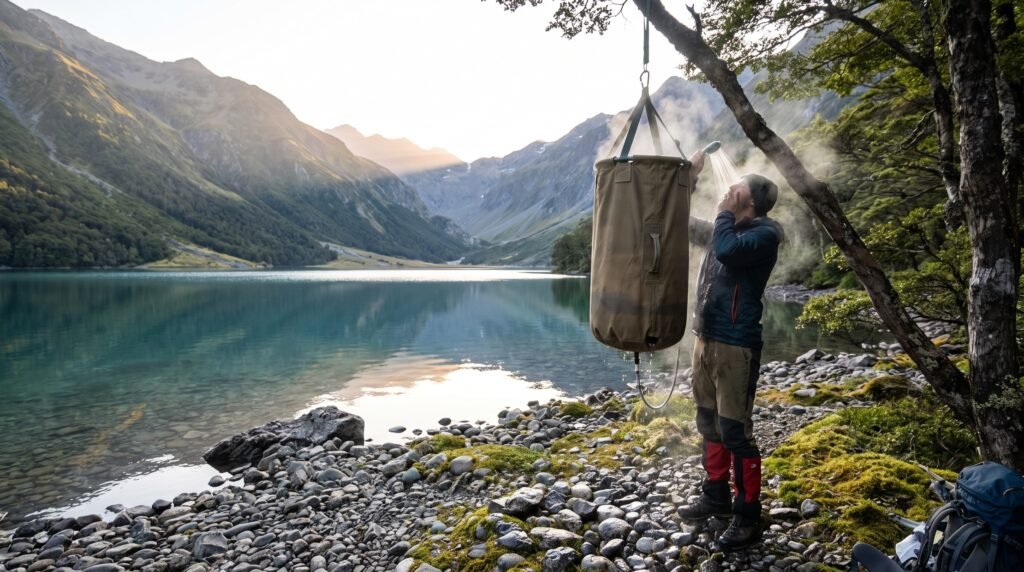
Gravity-fed showers are the old-school approach, and honestly, they’re not going anywhere because they never fail. No battery, no pump, no electronics to short out when they get wet. You hang a water bag or bladder from a tree branch, a shepherd’s hook, or your vehicle’s roof rack, and gravity does the rest.
The tradeoff is pressure. You need real elevation—at least 6-7 feet of height difference between the bag and the shower head—to get anything more than a weak dribble. Physics doesn’t negotiate here.
Solar Shower Bags: Simple but Slow
Black PVC solar bags heat water passively using direct sunlight, typically hitting 100-110°F after 3-4 hours on a clear day. They’re cheap, packable, and require zero maintenance. The catch: cloudy days mean cold showers, and PVC bags degrade under UV exposure faster than you’d think—expect 1-2 seasons of hard use before they start cracking at the seams.
For dispersed camping or backcountry setups where weight matters more than comfort, gravity-fed solar bags are still the gold standard. Just manage your expectations on water temperature.
Getting Real Hot Water: Propane Heaters Change Everything
Here’s where things get genuinely luxurious. A portable propane water heater paired with either pump or gravity delivery turns your camp shower into something you actually look forward to, not something you dread.
These units work by igniting a propane burner that heats water on-demand as it passes through a heat exchanger coil—no tank, no waiting for a reservoir to warm up. Most tankless propane units deliver hot water within 10-15 seconds of ignition and can hit temperatures up to 114-120°F depending on flow rate and incoming water temp.
Critical Safety Notes Nobody Talks About Enough
Propane water heaters produce carbon monoxide. This isn’t optional safety advice—it’s non-negotiable. Never run one inside an enclosed tent, an outdoor shower cabin with poor ventilation, or any structure without active airflow. The CDC’s carbon monoxide guidelines exist for exactly this reason, and camping deaths from CO poisoning in enclosed spaces happen every single year.
Always position the unit outside the shower enclosure itself, running the hose through a gap or vent. Give it at least 3 feet of clearance from any flammable material, and never use it in high wind that could blow the flame back toward fuel lines.

- Licensed Under U.S. Patent No.US D1098378S
- Innovative integrated Design:This portable shower features an integrated design of water jug and pump, along with a silicone waterproof ring...
Building or Buying an Outdoor Shower Cabin
If you’re setting up something semi-permanent—a homestead, a glamping site, a seasonal cabin—a dedicated outdoor shower cabin upgrades the whole experience from “camping hack” to “actual bathroom facility.”
DIY cabins typically use cedar or pressure-treated pine framing with either canvas walls, corrugated polycarbonate panels, or reclaimed wood siding. Cedar is worth the extra cost here specifically because it naturally resists rot and mildew in constant-moisture environments—pine will need sealant reapplied annually or it starts breaking down within two to three seasons.
For the floor, skip anything that traps water. Composite decking boards or pressure-treated slats with gaps for drainage beat solid platforms every time. Standing water under a shower floor is a mold factory waiting to happen.
Insulation Matters More Than You’d Think
Even a “temporary” cabin benefits from basic insulation if you’re using it into shoulder seasons. A single layer of reflective foam board (R-value around 1.0 per inch) between exterior siding and interior paneling cuts down dramatically on heat loss, meaning your propane heater doesn’t have to work as hard and your hot water lasts longer per tank.
Gray Water: The Part Everyone Skips (And Shouldn’t)
This is the section that separates responsible off-gridders from the people who ruin campsites for everyone else. Shower runoff is gray water, and where it goes matters—both legally and ecologically.
Gray water contains soap residue, skin oils, and whatever biodegradable products you used. Even “eco-friendly” soaps aren’t harmless when dumped directly into streams, lakes, or ground water sources. Phosphates and surfactants disrupt aquatic ecosystems even in small concentrations.
- Never dump gray water within 200 feet of any natural water source. This is standard Leave No Trace protocol, not a suggestion.
- Use biodegradable, phosphate-free soap only—look for products certified under the EPA’s Safer Choice ecolabel program to know you’re actually getting what’s promised.
- Disperse, don’t pool. Broadcast gray water over a wide area of soil rather than dumping it in one spot. Concentrated dumping kills vegetation and creates stinking mud pits.
- Check local regulations before you go. National forests, BLM land, and state parks often have specific gray water disposal rules, and some require full containment with no ground disposal at all.
- Strain solids first. If you’re washing anything besides yourself, food particles or debris need to be filtered out and packed out with your trash, not left in the runoff.
If you’re running a fixed outdoor shower cabin at a homestead or seasonal site, consider a simple gray water French drain—a gravel-filled trench that lets water filter through soil naturally before it disperses. It’s a weekend project that keeps your setup sustainable for years instead of turning your favorite patch of ground into a swamp.
Respecting where your water goes isn’t a bureaucratic hassle. It’s what keeps public land usable, keeps campsites from getting shut down to shower access, and honestly, it’s just the right thing to do when you’re a guest in someone else’s wilderness.


Ultimo aggiornamento 2026-10-28 / Link di affiliazione / Immagini da Amazon Product Advertising API