
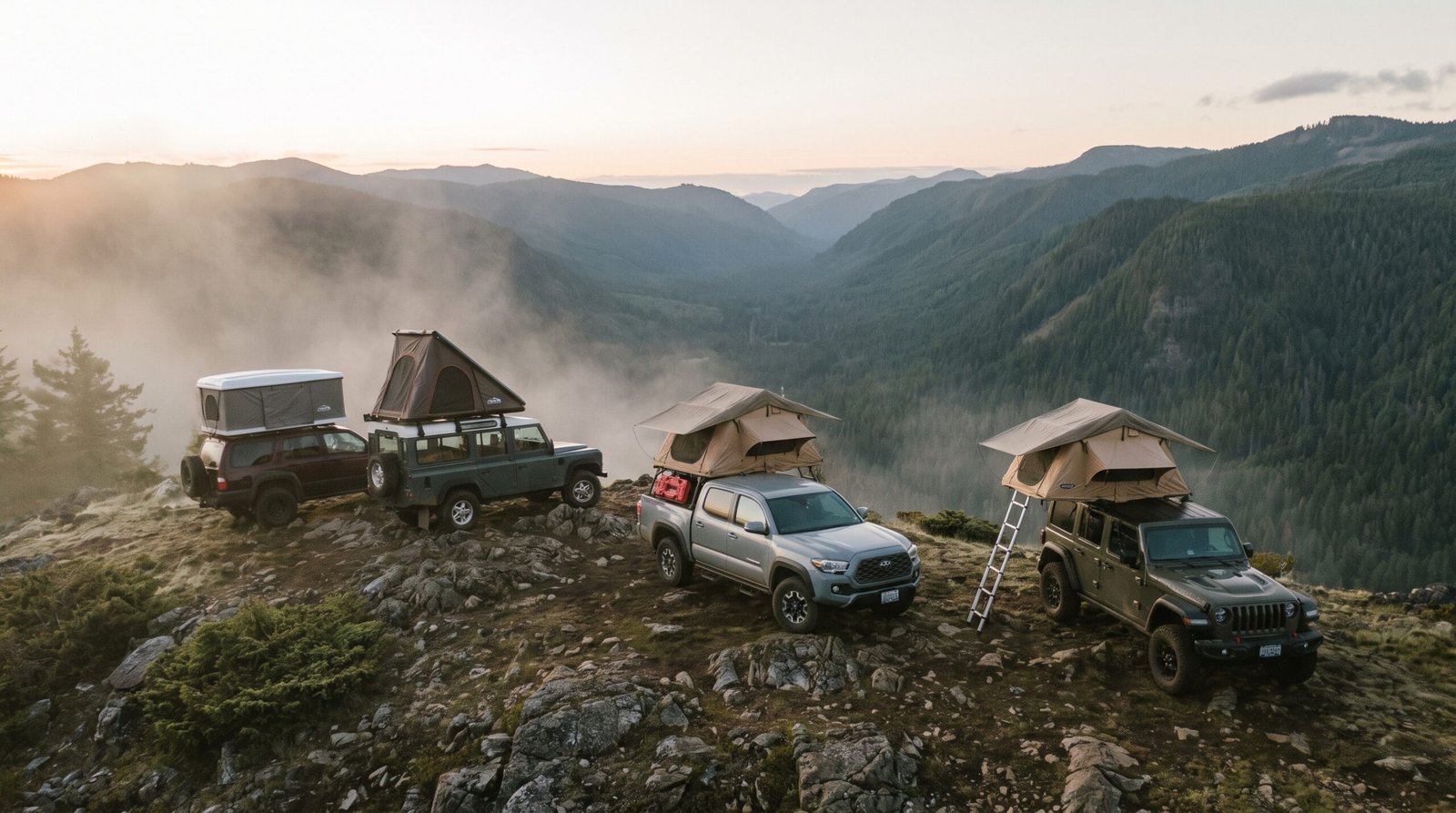
Let’s get one thing straight before you swipe your credit card: a rooftop tent will change how you camp, but it will also test the limits of your vehicle in ways you probably haven’t thought about. I’ve installed these things on everything from beat-up Tacomas to brand-new Broncos, and I’ve seen the mistakes people make when they buy based on Instagram photos instead of actual specs. This rooftop tent buying guide is the conversation I wish someone had with me before my first purchase.
Why Weight Capacity Is the Only Spec That Really Matters
Everyone gets excited about ladder placement, fabric denier, and vestibule size. I get it. But none of that matters if your roof rack rips off the sheet metal at 65 mph on the highway.
The single most important number in this entire rooftop tent buying guide is your vehicle’s dynamic roof load capacity. This is the weight your roof can safely carry while the vehicle is moving. It’s almost always dramatically lower than the static load capacity, which is the weight your roof can hold while parked.
Most factory crossbars are rated for 150-165 lbs dynamic load. A rooftop tent alone can weigh 120-165 lbs before you even climb in with your sleeping bag, cooler, and camp chair strapped to the ladder. Do the math and you’ll see why so many people end up with a dented roof or a cracked windshield from a rack that failed at speed.
Dynamic vs. Static Load: Stop Confusing the Two
I’ve watched people plant a 200-lb tent on their roof, check the “static load” number stamped somewhere in the owner’s manual, feel good about it, and drive off. That number is for camping, not for driving. Static load is what your roof rack can support while the vehicle sits still, and it’s usually 2-4x higher than dynamic capacity.
Here’s the practical breakdown:
- Static load = tent weight + people sleeping inside + gear, while parked
- Dynamic load = tent weight + mounting hardware, while driving down the road
You need to check both, but the dynamic number is your hard ceiling for what you can legally and safely mount. Manufacturers like Thule and Yakima publish these figures directly, and the National Highway Traffic Safety Administration has flagged rooftop cargo failures as a real contributor to highway accidents when owners exceed rated limits.
If your factory rack is rated at 150 lbs dynamic, you’re not just looking for a lighter tent. You may need an aftermarket load bar system rated higher, which is its own investment on top of the tent itself.
RTT Installation: What Actually Happens on Install Day
Nobody talks about how physically demanding RTT installation is until you’re standing on a step stool trying to lift 130 lbs of folded canvas and aluminum onto your roof by yourself. Spoiler: you need a second person, minimum. Some hardshell models genuinely need three.
Here’s what a realistic installation day looks like:
- Mounting the crossbars or load bars first, torqued to manufacturer spec (a torque wrench isn’t optional here)
- Lifting the tent onto the bars, which usually means a ladder, a friend, and some colorful language
- Securing it with U-bolts or track-mounted brackets, checked and rechecked after the first 50 miles of driving since hardware settles
- Running the ladder length test to make sure it actually reaches the ground on your specific vehicle height
Budget half a day for your first install, even if the manufacturer’s video makes it look like a 20-minute job. And recheck those bolts after your first real trip. Vibration loosens everything.
Are Rooftop Tents Worth It? The Honest Answer
So, are rooftop tents worth it? Depends entirely on how you camp and what you drive.
They’re worth it if you camp in areas with uneven, rocky, or wet ground where a ground tent is miserable. They’re worth it if you value setup speed, since most pop up in under two minutes. They’re worth it if you’re dealing with critters and want a few feet of elevation between you and whatever’s wandering around camp at 2 AM.
They’re not worth it if you drive a small crossover with a low dynamic load rating, if you frequently need full roof access for kayaks or cargo boxes at the same time, or if your fuel budget is already tight. A rooftop tent adds real aerodynamic drag. Expect a 10-20% MPG hit on highway trips, every single time you drive with it mounted.
This is where a proper rooftop tent buying guide earns its keep: it’s not about finding the “best” tent, it’s about finding the tent that matches your specific truck, SUV, or wagon and how you actually use it.
Materials, Insulation, and Weather Realities
Softshell tents use ripstop poly-cotton canvas, which breathes well and handles heat decently but takes longer to set up and stores more moisture in humid climates. Hardshell tents use fiberglass or aluminum shells, set up almost instantly, and handle snow load far better, but cost significantly more and often weigh more too.
Insulation matters more than people expect. A 3-season tent with a thin poly floor will feel like a meat locker once temps drop below 40°F. If you’re planning shoulder-season or winter trips, look for tents with insulated wall panels or add a separate insulated liner, which typically adds $150-300 to your total spend.
For gear that actually holds up to real conditions, this is a solid option worth comparing against your vehicle’s specs:

- 100% ALUMINUM ALLOY MATERIAL: Made of high quality aircraft grade aluminum, not easy to aging and thermal expansion and contraction, super...
- STAINLESS STEEL AIR PRESSURE LEVER + POLYESTER FABRIC: Polyester fabric is more comfortable, breathable and waterproof. Strong blackout and...

Ladder and Annex Considerations
Telescoping ladders adjust to different vehicle heights, which matters if you ever swap vehicles or camp on uneven terrain where the tent sits at an angle. Fixed-length ladders are cheaper and sturdier but only work if your roof height stays constant.
An annex room (a zip-on ground-level tent that hangs below the RTT) adds serious functional space for gear storage, a changing area, or a dry entry point in rain. It’s the single upgrade most first-time buyers regret not getting on day one.
Choosing Between Roof Racks: Load Bars, Towers, and Track Systems
Your rack setup determines whether your dream tent is even an option. Track-mounted systems distribute weight along the vehicle’s factory-installed rails, generally handling dynamic loads better than clamp-on towers. Aftermarket load bars from brands rated specifically for RTT use often carry 300+ lb dynamic ratings, which gives you real headroom.
If your factory rack tops out low, don’t force it. Upgrading to a heavier-duty rack system before buying the tent will save you from a return, a refund fight, and a scared feeling every time you hit a pothole at highway speed.
For anyone assembling a full off-grid or overlanding setup, having a reliable secondary piece of equipment matters just as much as the tent itself:

- High Quality Meatal Material:The roof top tent is designed with high-quality aluminum for bottom plate, top cover and 4 corners. Aluminum...
- Equipped with 12V216W solar panel: The solar panel supports fast charging of mobile power banks, which can meet your power needs when traveling...
Hidden Costs People Forget About
This is the part of the rooftop tent buying guide nobody wants to write, because it’s not glamorous. But it’s the stuff that turns a $1,200 purchase into a $2,500 one.
- Upgraded roof racks: $300-800 if your factory rack can’t handle the dynamic load
- Professional installation: $100-250 if you don’t want to DIY it, and honestly, for a first-timer, it’s money well spent
- Annex rooms: $150-400 depending on brand and size
- Insulated liners for cold weather: $150-300
- Mattress upgrades: stock foam pads are often thin; a proper 3-4 inch memory foam replacement runs $100-200
- Fuel economy hit: 10-20% worse MPG, which adds up fast on long road trips
- Storage solutions: these things are huge, and off-season storage in a garage or shed isn’t always free if you’re renting
- Annual maintenance: re-waterproofing canvas, replacing zippers, checking hardware torque, easily $50-100 a year in supplies
None of these costs are dealbreakers. But walking in with eyes open beats getting blindsided three months after your first trip. Factor in the extras before you commit, check your dynamic load rating twice, and you’ll end up with a setup that actually earns its spot on your roof for years, not just one good summer.
Ultimo aggiornamento 2026-10-28 / Link di affiliazione / Immagini da Amazon Product Advertising API