
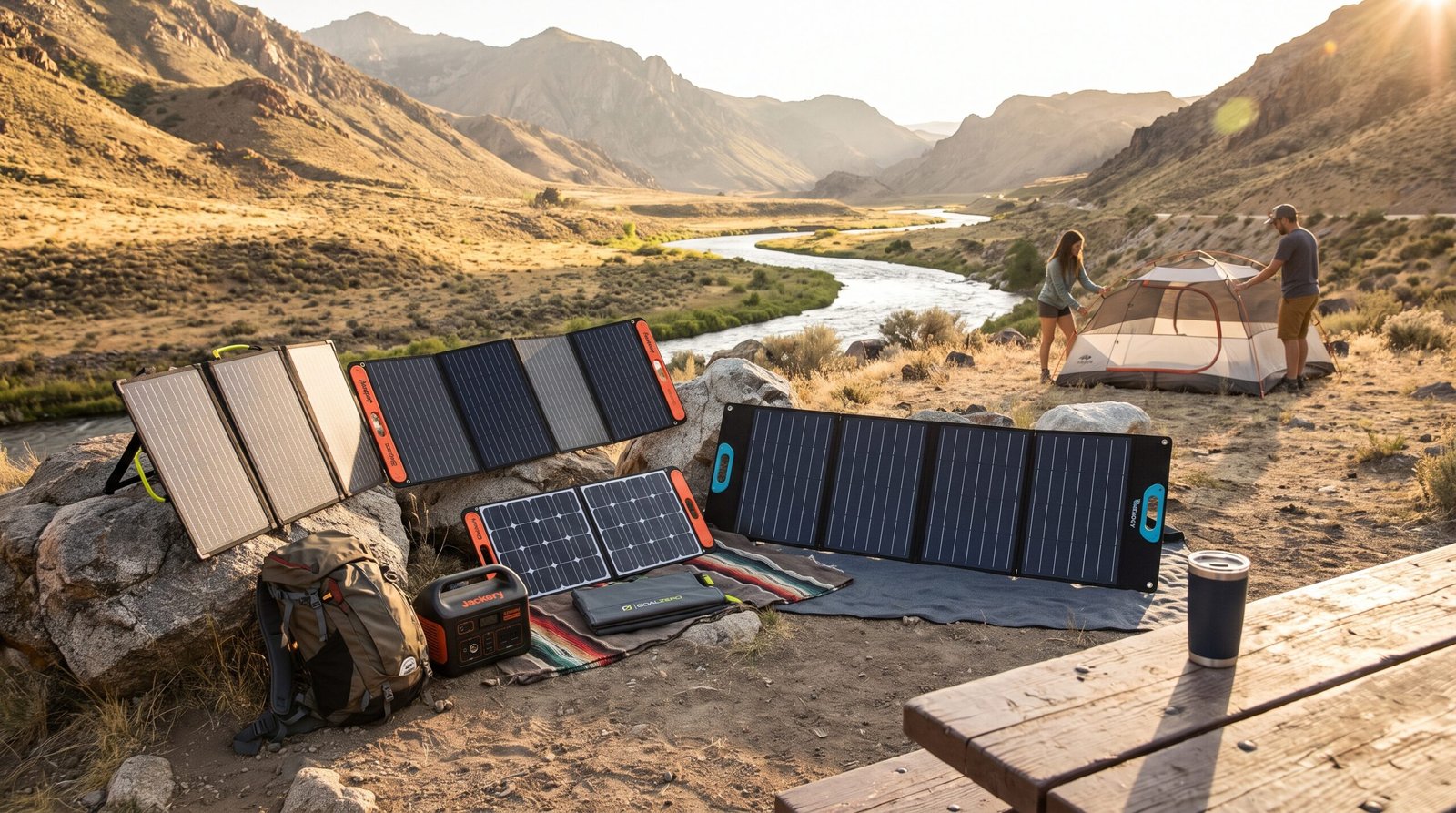
The moment your camp chair is set up further than an extension cord can reach, you realize how much RV parks have been holding you hostage. Finding the best portable solar panels isn’t about saving a few bucks on hookup fees anymore. It’s about parking your rig on a cliff overlooking nowhere and still running your fridge, your laptop, and your string lights without a second thought.
We tested a batch of folding units this season to figure out which ones actually earn a permanent spot in the truck bed. Here’s what came out on top.

- [Industry-Leading 25% Efficiency] 16BB N-Type cells deliver more power from the same sunlight, supporting RV trips, camping, blackout backup, and...
- [Lightweight & Magnetic Design] Weighing 13.89 lb and folding to 23.72 x 22.99 x 1.97 in, this 200W panel stores at backpack size with a magnetic...

Key Features & Performance
This unit lands in the 200W range, which is the sweet spot for most weekend warriors and vanlifers who aren’t running an air conditioner. Anything below 100W struggles to keep a mini-fridge and a laptop charged through a full day of use. Anything above 300W starts feeling like overkill unless you’re powering a permanent cabin setup.
The kickstand legs are the real story here. Unlike cheaper folding solar panel kits that rely on flimsy plastic hinges, this one uses a reinforced aluminum frame that survives repeated setup and breakdown. That matters if you’re moving locations every few days.
Setup takes under three minutes. Unfold, prop the legs, plug into your power station. The monocrystalline cells hit their rated output fast, even in slightly overcast conditions, which isn’t something you can say about every budget panel on the market. Cell efficiency numbers and how they’re measured are well documented by the U.S. Department of Energy’s solar technology basics page, if you want to nerd out on the specifics.
Cold weather performance is solid down into the 30s Fahrenheit. Below that, output drops slightly, which is typical for silicon-based cells and not a flaw specific to this panel.
Pros & Cons
- High conversion efficiency even in partial shade or hazy skies
- Durable kickstand design that holds angle in moderate wind, up to about 15 mph before you’ll want to stake it down
- Compact folded size at roughly 21 x 20 inches, fits behind a truck seat
- Compatible connectors with most major power station brands without needing an adapter
- Long cable length so you can place the panel in full sun while your gear stays in the shade
- No built-in kickstand angle lock, so gusty conditions can shift the panel over time
- Zipper pouch feels cheap compared to the build quality of the panel itself
- No integrated handle strap, which makes carrying it alongside other gear a little awkward
A Great Alternative
If your rv solar setup needs more juice, or you’re running a small AC unit or power tools off-grid, stepping up to a 400W configuration changes the game. This alternative pairs two 200W flexible solar panels off grid style, meaning they can be mounted flat on a roof or curved surface instead of propped on legs.
It costs more upfront, but for anyone parking long-term at a remote cabin site or running a rooftop van setup, the flexibility (literally) is worth the price jump.

- 【High Conversion Efficiency, Fast Charging】The upgraded A+ grade monocrystalline solar cells achieve a conversion rate of 24%, maximizing...
- 【Wide Compatibility, 8-in-1 MC4 Converter】The Twelseavan 200W solar panel features a 5-in-1 MC4 connector cable and 3 DC adapters, making it...
Final Verdict
For most people chasing freedom from RV parks, the 200W folding panel hits the right balance of power output, portability, and price. It won’t run a full-size AC unit, but it will keep your essentials charged indefinitely as long as the sun shows up. If you’re building a permanent off-grid cabin or need serious wattage, the flexible 400W alternative is the smarter long-term investment.
Either way, you stop caring about hookup fees and quiet hours. That alone is worth the cost of admission.
Other Recommended Gear
If you’re upgrading your setup, a few extra pieces of gear make the off-grid experience noticeably smoother, from storage solutions to backup charging options.


A Quick Note on Panel Theft
Leaving a portable solar panel unattended at a trailhead or overnight in a parking lot is asking for trouble. Cable lock kits designed for solar gear are inexpensive and slow down opportunistic theft enough to matter. Positioning your panel where it’s visible from your rig’s window, rather than tucked behind a tree for “better sun,” also helps. And if you’re stepping away for hours, folding it up and stashing it inside beats leaving free money sitting in the open.
Ultimo aggiornamento 2026-10-28 / Link di affiliazione / Immagini da Amazon Product Advertising API